
- October 13, 2026
- By Jarred Berhow
- In Auto Repair Tips
- 15
- 0
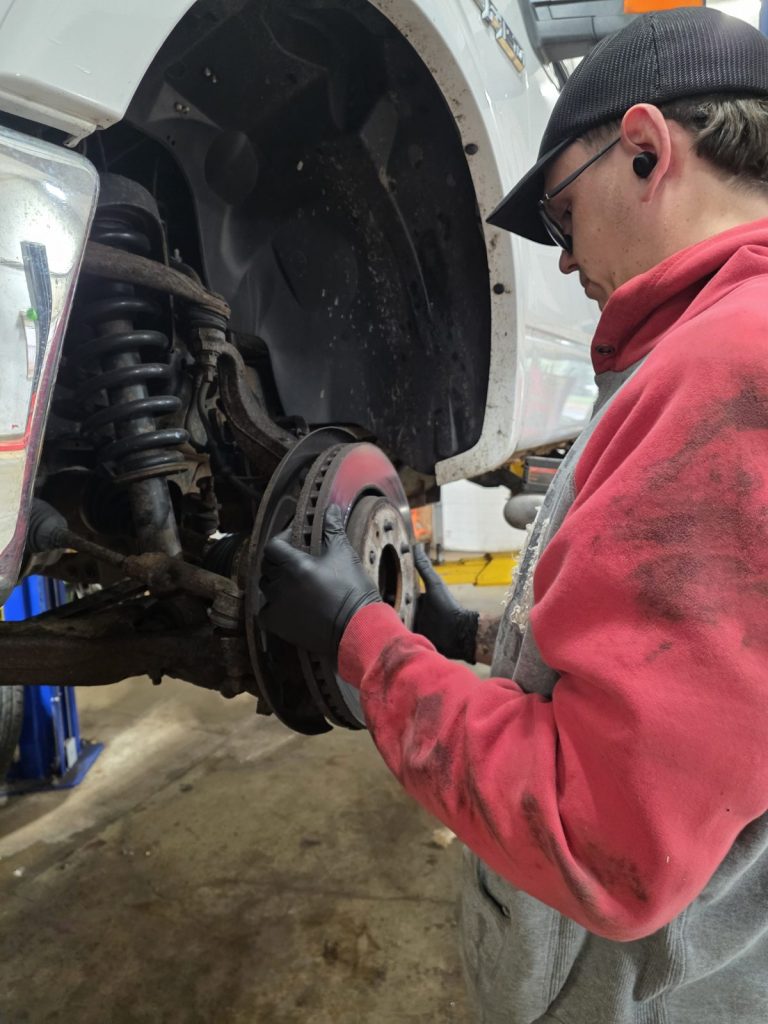
Road salt keeps Wisconsin roads open and quietly eats brake lines, rotors and calipers. Here is what it does and how to fight back.
Every winter, Wisconsin road crews spread salt and salt brine to keep us moving through snow and ice. That salt keeps the roads safer. It also coats the underside of every car, SUV, minivan and pickup that drives on them. By March, it has worked into brake lines, calipers, rotors, exhaust and suspension parts.
At TinJToo Auto Repair in Star Prairie, spring is when we see the damage. This guide covers what road salt does to your vehicle, what you can do about it, and the signs that mean it is time for a closer look.
Salt mixed with water speeds up rust. When slush splashes up under your vehicle, it leaves a salty film on bare steel and iron parts. Every thaw and refreeze keeps that film wet, so the rust keeps working all winter long.
Your brakes sit right in the spray zone. Brake lines run along the underside of the body, and the calipers and rotors sit just behind the wheels where slush hits hardest.
Most vehicles use steel brake lines to carry fluid from the master cylinder to each wheel. Over several salty winters, rust can scale the outside of those lines until a weak spot gives way. Sometimes that happens during a hard stop, when pressure in the system is highest.
When a line leaks, the pedal can feel soft or sink toward the floor, and you may spot wet spots near a wheel or under the middle of the vehicle. A rusted line needs to be replaced right away.
Brake fluid matters too. It absorbs moisture over time, and that moisture can corrode parts from the inside. Many carmakers call for replacing brake fluid every 2 to 3 years, which is a good habit in our climate.
A little orange rust on your rotors after a rainy night is normal, and it wipes off after a few stops. Heavy rust can pit the rotor surface and eat away at the edges, which leads to noise, uneven pad wear and a pulsing pedal.
Calipers take a beating as well. Salt and rust can seize the caliper slides, so the pads no longer move freely. One common result is an inner pad worn down to metal while the outer pad still looks fine. A seized caliper can also make the vehicle pull to one side or drag a brake, which builds heat and a hot smell after a drive. Parking brake cables and hardware can rust in place, too, so the parking brake may stop holding or refuse to release.
Heavier vehicles like a Ford Explorer, Ram 1500 or Dodge Grand Caravan already work their brakes harder, so salt damage tends to show up on them sooner.
Pipes, mufflers and the hangers that hold them up can rust through, so a louder exhaust or a new rattle underneath is often the first sign. Coil springs can rust and snap, sway bar links can seize or break, and rust can weaken spring mounts and subframes.
Add spring frost heaves and potholes on the roads around Star Prairie and New Richmond, and that is a lot of wear in a short season. If something clunks over bumps this spring, our suspension and steering repair page explains what we check.
Yes. Rinsing off the salt is one of the cheapest ways to slow rust on brake lines and calipers. An underbody spray at a car wash or a careful garden-hose rinse on a warmer day both work. Aim for a rinse every week or two in midwinter, and right after a big storm.
Expert tip: Wash when the temperature is above freezing and the vehicle has a chance to dry before night. Spraying the underside on a subzero day can freeze water into door locks, brake parts and the parking brake. Pay extra attention to the area just behind each wheel, where slush packs in the most.
That check should run from the brake pedal all the way back to each wheel, because salt damage rarely stays in one place. After a Wisconsin winter, TinJToo Auto Repair measures, cleans and tests the parts road salt attacks most, starting with these:
While the vehicle is up, it makes sense to look over the exhaust, the suspension and your tires. If the steering wheel sits off-center after pothole season, a wheel alignment can save your tires, and our tire services cover rotation and swapping off winter tires.
Expert tip: Book your spring brake check in March or April, after the salt is gone and before summer driving picks up. Catching a seized caliper slide early can save you a set of pads and rotors, and finding a rusty brake line in the shop is much better than finding it on the highway.
A grinding noise usually means the pads are worn to metal. A soft or sinking pedal can point to a leaking line or air in the system. Pulling to one side, a burning smell after driving, or a brake or ABS warning light on the dash all need a professional look.
Any of those is a reason to schedule brake repair right away. If the pedal suddenly drops toward the floor, slow down carefully and pull over when it is safe. Then get the vehicle safely to our shop and call to let us know it is coming.
TinJToo Auto Repair is at 170 County Hwy M, Star Prairie, WI 54026, open Monday through Friday from 8:00 AM to 5:00 PM. We send a digital estimate with photos and videos, so you can see the rust for yourself before you approve any work.
If a brake line or caliper job keeps your car with us, ask about a loaner vehicle so you can keep up with your week. Call (715) 417-2844 or schedule online, and learn more about auto repair in Star Prairie or our mechanic services. You can also ask our shop a brake question before you come in.