- (715) 417-2844
- 170 County Hwy M, Star Prairie, WI 54026
- Mon - Fri: 8:00am - 5:00pm

Check Engine Light Diagnostics in Star Prairie, WI
- HOME
- /
- Our Services: Maintenance, Diagnostics and Repair
- /
- Check Engine Light Diagnostics in Star Prairie, WI
SCHEDULE SERVICE
Book online or call (715) 417-2844. Monday through Friday, 8:00 AM to 5:00 PM.
SCHEDULE ONLINECheck engine light diagnostics at TinJToo Auto Repair go well past reading a code. We test the vehicle, study the data the computer saved, and find the actual reason the light came on, so the repair you approve is aimed at the real cause.
Drivers from Osceola, New Richmond and around the St. Croix Valley often come to us after a part was replaced and the light came right back. Tracking down those stubborn problems is some of our favorite work. If the light just came on this morning or has been glowing for months, the sections below explain what it means and what to do next.
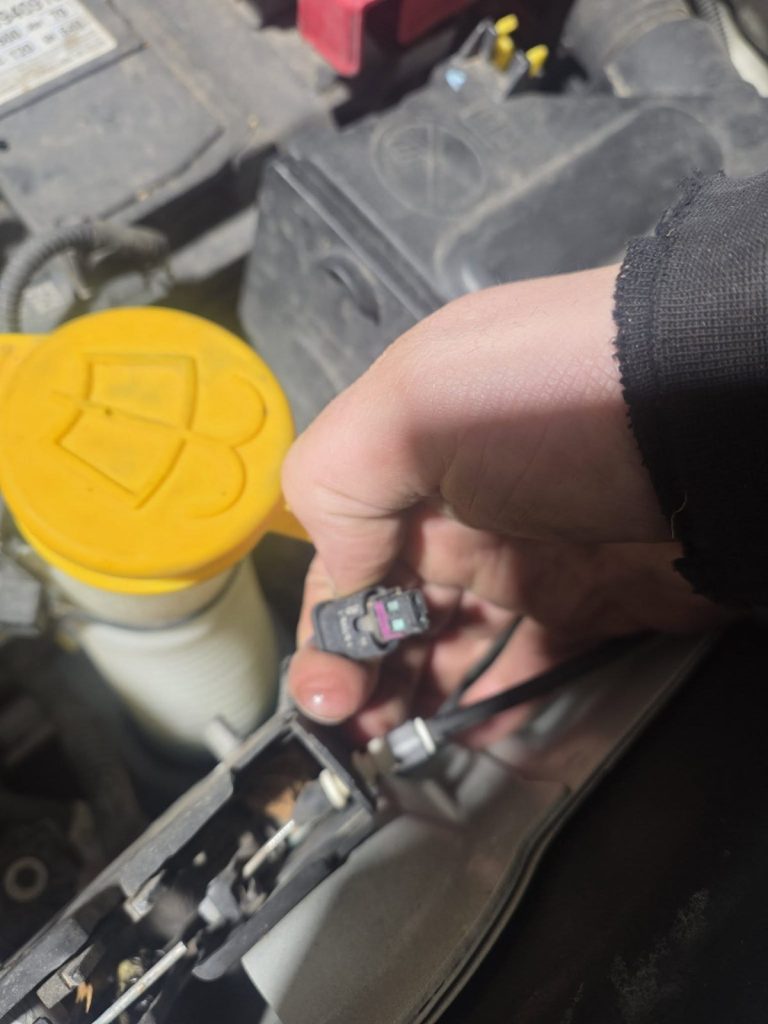
What does it mean when my check engine light comes on?
Your check engine light means the engine computer has spotted a fault in a system it watches, such as ignition, fuel delivery, air intake, the catalytic converter or the fuel vapor system. Cars, SUVs and pickups sold in the U.S. since 1996 use OBD-II, which stores a trouble code that tells a technician where to start looking.
Some causes are simple. Others can damage costly parts if ignored. The most common include:
- Worn spark plugs or failing ignition coils
- Oxygen sensors that have slowed down with age
- Vacuum leaks from cracked hoses or gaskets
- A dirty or failing mass airflow sensor
- A thermostat stuck open, common in cold weather
- A catalytic converter that is no longer working well
Some shifting faults also turn on the light, and we cover those on our transmission repair page. Either kind of code tells us where testing should begin.
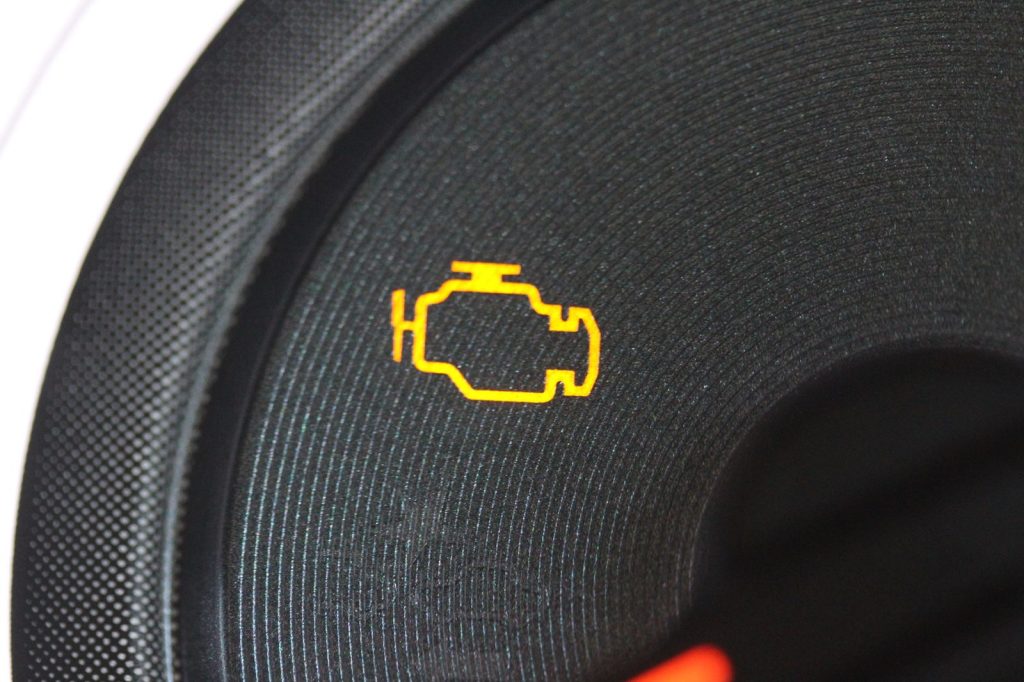
A flashing check engine light is more urgent than a steady one
A flashing check engine light usually means an active misfire, where fuel enters a cylinder and does not burn. That raw fuel can overheat and ruin the catalytic converter in a short time. Slow down, avoid hard acceleration and get the vehicle to a shop as soon as you safely can.
A steady light is less urgent but still worth a visit soon. It points to a fault the computer has confirmed, and most steady-light problems get worse or more expensive with time. Misfires often trace back to ignition and fuel parts we cover on our engine repair page.
Expert tip: If your light starts flashing on the highway, ease off the gas and hold a steady speed until you can exit safely. Avoid pulling a trailer or climbing long hills with an active misfire. Note what you were doing when it started flashing, since that helps us find the cause.
Can a loose gas cap turn on the check engine light?
Yes. A loose, cracked or missing gas cap lets fuel vapor escape, and the computer reads that as a leak in the fuel vapor system, often called the EVAP system. Tighten the cap until it clicks, then give it several days of normal driving. If the light stays on, have it checked.
The EVAP system traps gasoline fumes from the tank and sends them back to the engine to be burned. Besides the gas cap, small leaks can come from cracked hoses, a failing purge or vent valve, or a rusty filler neck. Road salt and cold are rough on those parts here in Wisconsin. The good news is that EVAP faults rarely hurt the engine, so you usually have time to schedule a visit.
A check engine light code is only the starting point
A trouble code names the system that noticed a problem and the condition it saw. It does not name the failed part. A code for a lean condition, for example, could come from a vacuum leak, a weak fuel pump, a dirty airflow sensor or a leaking gasket, and each one needs a different fix.
Real diagnosis starts with the code, then looks at freeze-frame data, a snapshot of engine speed, temperature, load and fuel trims at the moment the fault was set. Next comes live data while the engine runs, followed by hands-on tests of the suspect part or circuit. Only then do we recommend a repair.
A quick code read alone can send someone home with a part they did not need. Testing first is the same approach our mechanics use on every job.
Expert tip: Write down what the vehicle was doing when the light came on. Was the engine cold or warm, were you on the highway or a back road, was it raining, had you just filled the tank? Those details line up with the freeze-frame data and can cut diagnosis time.
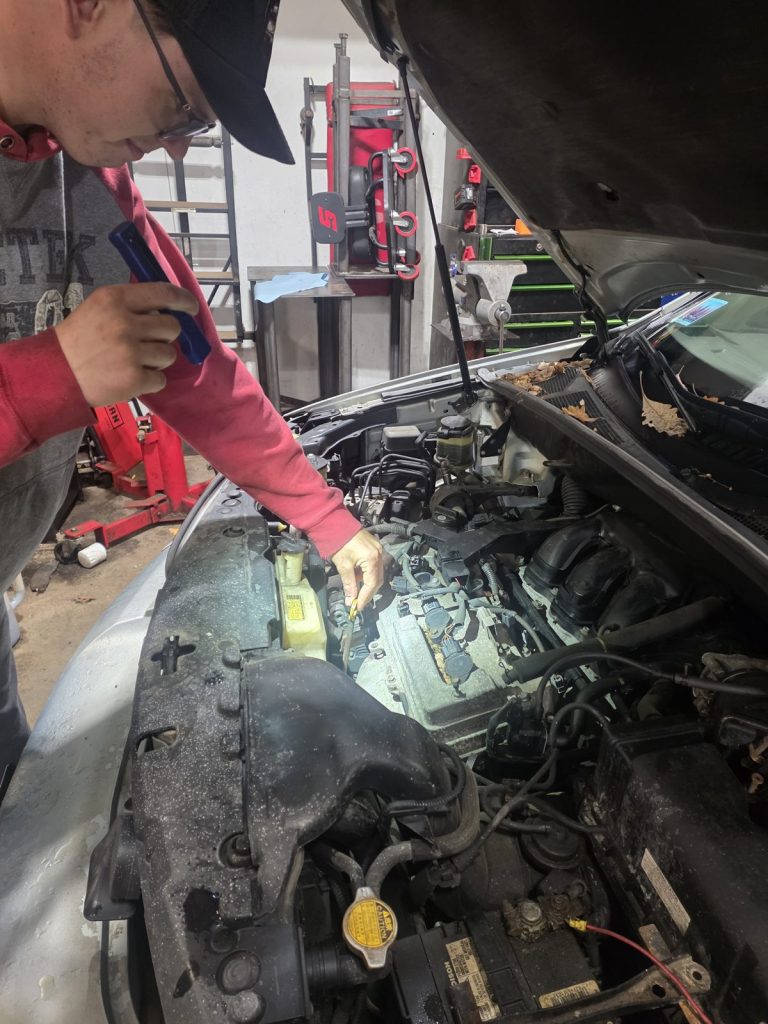
Our Star Prairie shop finds check engine light problems others missed
Hard check engine light problems often come and go, so our Star Prairie shop looks for the pattern behind them. We compare freeze-frame and live data, test wiring and connectors, check for vacuum and vapor leaks, and drive the vehicle under the same conditions that set the code. We work to confirm the cause before recommending any parts.
Intermittent faults are the toughest. A loose ground wire, a connector with a little corrosion from road salt, or a sensor that acts up only when it is below zero may hide while the vehicle sits in a warm shop. Sometimes we need to recreate those conditions to catch the problem in the act.
Complex diagnostics like these are a core strength at TinJToo Auto Repair, led by owner Jarred Berhow, an ASE Master Certified technician. You can meet our technicians.

Clearing the check engine light erases the evidence
Clearing the code turns the light off and leaves the problem in place. It also erases the freeze-frame data a technician needs and resets the readiness monitors, the self-tests your car runs on its own systems. The light usually returns, and by then there is less evidence to work with.
Some drivers clear codes with an inexpensive scanner, hoping the problem was a fluke. Once in a while it was. More often the fault returns days later, sometimes after doing more damage, like a misfire that has been heating up the catalytic converter the whole time.
Expert tip: Many of the codes we see start with skipped maintenance. Keeping up with oil changes and replacing spark plugs on the schedule in your owner’s manual, often somewhere between 60,000 and 100,000 miles, prevents a lot of misfire and sensor codes before they start.
How much do check engine light diagnostics cost, and how long do they take?
Check engine light diagnostic cost and time depend on the code, whether the problem is steady or intermittent, how many systems are involved, and how much testing it takes to confirm the cause. A loose gas cap is quick. An intermittent electrical fault takes longer. Either way, you approve a digital estimate, photos included, before any repair begins.
Paying for proper diagnosis usually costs less than paying for parts that did not fix anything. Many drivers simply wait in the shop for a straightforward check. For a light that comes and goes, it often makes more sense to leave the vehicle with us for the day while we text you what we find.
Where can I get check engine light diagnostics near me in Star Prairie?
As soon as the light comes on, call (715) 417-2844 or schedule online, and tell us whether it is steady or flashing and whether the vehicle feels any different. You will find TinJToo Auto Repair at 170 County Hwy M, Star Prairie, WI 54026, open weekdays from 8:00 AM until 5:00 PM.
Drivers from Osceola, New Richmond and across the area can find more about auto repair in Star Prairie at our shop, or contact us about check engine light diagnostics with any questions before you come in. If you are not sure how soon to come in, call and we will help you find the soonest time to bring it in.
Star Prairie, WI 54026:
170 County Hwy M
Call TinJToo Auto Repair
(715) 417-2844
Mon - Fri: 8:00am - 5:00pm
After-hours drop-off available
TINJTOO AUTO REPAIR
- 170 County Hwy M
- Star Prairie, WI 54026
- Phone:(715) 417-2844
- Find us on Google
- Privacy Policy
OUR SERVICES
HOURS
- Monday:8:00am - 5:00pm
- Tuesday:8:00am - 5:00pm
- Wednesday:8:00am - 5:00pm
- Thursday:8:00am - 5:00pm
- Friday:8:00am - 5:00pm
- Saturday:Closed
- Sunday:Closed