- (715) 417-2844
- 170 County Hwy M, Star Prairie, WI 54026
- Mon - Fri: 8:00am - 5:00pm

Transmission Repair in Star Prairie, WI
- HOME
- /
- Our Services: Maintenance, Diagnostics and Repair
- /
- Transmission Repair in Star Prairie, WI
Transmission repair in Star Prairie starts with a careful diagnosis, because many shifting problems trace back to fluid, sensors, solenoids, wiring or software that cost far less to fix than a whole transmission. We find out which one it is before anyone talks about replacement.
At TinJToo Auto Repair, we work on automatic transmissions, CVTs and manual clutches in Asian and domestic vehicles, from commuter cars and family minivans to half-ton trucks. Drivers from Osceola, Dresser and around the St. Croix Valley come to us for honest answers on one of the biggest repair decisions a vehicle owner faces. We show you what we find with photos and video, and you decide.
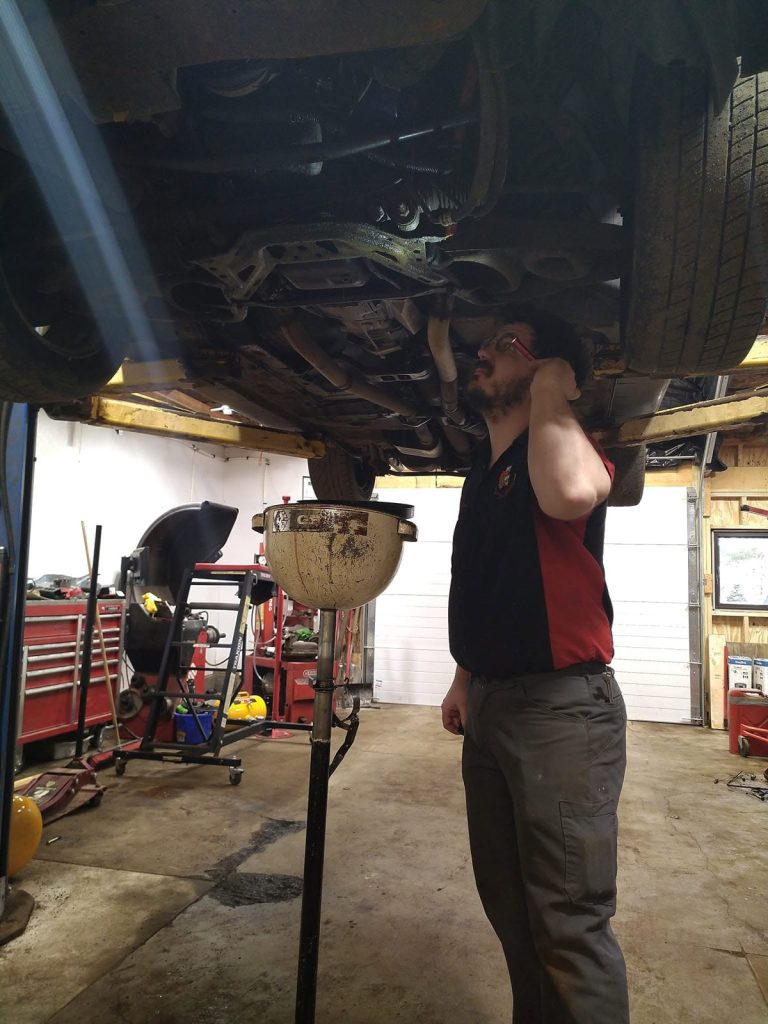
If your transmission starts slipping, here is what to do in the next 5 minutes
If your transmission starts slipping, ease off the gas and skip hard acceleration, passing and steep hills. Get to a safe spot off the road, put it in Park and turn on your hazards. Slipping builds heat fast, and heat is what turns a fluid or sensor problem into internal damage.
Once you are stopped, use the next few minutes well:
- Look under the middle of the vehicle for red or brown fluid
- Notice any burning smell, which means the fluid is running hot
- Write down your speed, the gear and the outside temperature when it slipped
- Call (715) 417-2844 before you put many more miles on it
Those notes help us recreate the problem on a road test, which speeds up the diagnosis.
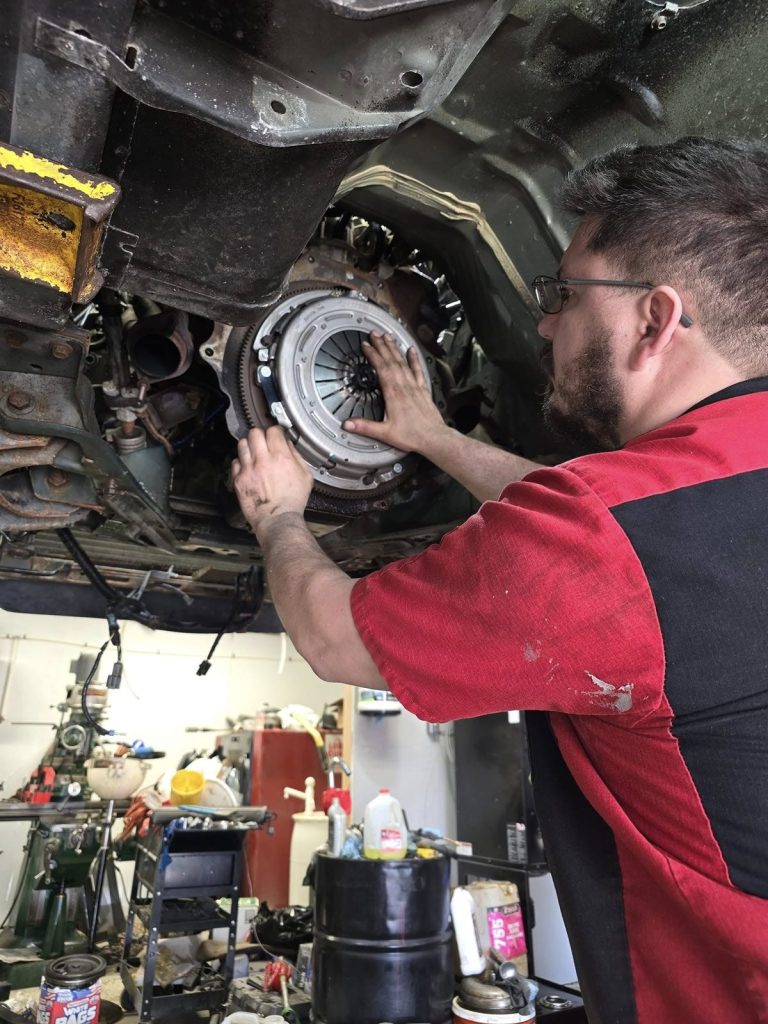
What are the warning signs that I need transmission repair?
The main signs you need transmission repair are slipping, delayed or harsh shifts, a shudder when accelerating, red or brown fluid under the vehicle, a burning smell, and whining or clunking noises. A warning light can come on too. Early attention often keeps a small problem from growing into a large one.
Slipping feels like the engine revs climb while the vehicle barely speeds up. A delayed shift is a long pause before it moves in Drive or Reverse. A clunk when you shift into gear, or a hum that rises with speed, can point inside the transmission or farther down the drivetrain.
Transmission faults often set codes, so check engine light diagnostics are usually the first step. Dark brown fluid with a burnt smell means it has been overheated.
Automatics, CVTs and manual clutches each need different transmission repair
Automatic transmissions use gears, clutches and hydraulic pressure controlled by a computer. CVTs, common in Subaru and Nissan models, use a steel belt or chain running between two pulleys for smooth, stepless acceleration. Manual transmissions use a clutch you work with your foot. Each wears differently, so transmission repair starts with knowing which type you drive.
CVTs are sensitive to fluid type and condition. A Subaru Outback or Nissan Rogue with a CVT that shudders or whines may have a fluid, sensor or software issue, or in some cases need replacement.
Manual clutches wear with use. Signs include a clutch pedal that engages higher than it used to, slipping under load, grinding into gear or a burning smell on hills.
Expert tip: If your transmission has a dipstick, check the fluid exactly as your owner’s manual describes, since many require the engine running and fully warm. Many newer vehicles have no dipstick at all, so ask us to check the level and condition at your next visit. Never top it off with the wrong type of fluid.
Heat wears out transmission fluid faster than anything else
Stop-and-go traffic, long hills, summer heat and heavy loads all push fluid temperature up, and fluid that runs hot loses its ability to protect the clutches, bearings and seals inside your transmission.
Does pulling a trailer or boat mean more transmission service?
Yes. Pulling a small trailer or a fishing boat with an SUV counts as severe service for the transmission. The extra load builds heat, and heat wears out fluid sooner. Check your owner’s manual for the severe-service fluid interval and your vehicle’s rated load, and stay within both.
A Ford Explorer or Toyota Tacoma pulling a boat to the lake for the weekend works its transmission harder than a week of commuting.
Short trips in extreme cold and dusty gravel roads count as severe service too, which describes a lot of driving in western Wisconsin. Ask us to check fluid color and condition during your next oil change.
Expert tip: After a summer of pulling a boat or small trailer, plan a transmission fluid service before winter. Fresh fluid protects the parts that took the most heat all season, and it flows better on the first subzero morning.
AWD and 4WD problems can feel like transmission trouble
A whine, clunk or shudder that seems like transmission trouble often comes from the parts that carry power to the wheels. On all-wheel drive SUVs and Subarus, that means the transfer case or center coupling, the front and rear differentials and the driveshaft. Worn fluid or mismatched tires there cause binding, noise and vibration.
Whining that changes with speed, a clunk when starting from a stop, or a shudder on tight turns in a parking lot can all point to differential or transfer case trouble.
Expert tip: When one tire on an all-wheel drive vehicle is ruined, ask about tread depth on the other three before buying a single replacement. On many AWD systems, a big difference in tread between tires can strain the drivetrain. Your owner’s manual lists how much difference the system can handle.

Our Star Prairie shop diagnoses before any major transmission decision
Our Star Prairie shop diagnoses first because many transmission problems come from low or worn fluid, a failed sensor, a sticking solenoid, damaged wiring or a software issue. Each of those costs far less than replacing a transmission. Scanning, testing and a road test tell us what is really wrong before you make a big decision.
We read stored codes and live data, check fluid level and condition, test sensors and solenoids, and drive the vehicle to feel how it shifts. When fluid service or a smaller repair will solve it, we tell you. Our mechanic services page explains how a visit works from diagnosis to warranty.
When the transmission does have internal damage, replacement is often the most practical fix. We replace transmissions when needed and walk you through the options so you can decide. Some engine misfires feel like a transmission shudder, and those are handled through engine repair.
Transmission repair cost and time depend on what actually failed
Transmission repair cost and time depend on the type of transmission, what failed, whether a fluid service or smaller repair will fix it, parts availability and whether replacement is needed. A fluid service is quick. A replacement takes longer. Either way, you see photos and the full estimate before we touch the transmission.
Transmission work is a big expense. TinJToo Auto Repair offers a 4-year / 48,000-mile warranty on repairs, and if the vehicle needs to stay with us while the work is done, ask about a loaner vehicle. You can also spread the cost with EasyPay Finance when a big repair lands at a bad time.
Where can I get transmission repair near me in Star Prairie?
At the first sign of slipping, shuddering or leaking fluid, call (715) 417-2844 or schedule online, and tell us when the problem shows up. TinJToo Auto Repair is at 170 County Hwy M, Star Prairie, WI 54026, and the shop is open Monday to Friday, 8:00 AM to 5:00 PM.
Drivers from Osceola, Dresser and across the area can learn more about auto repair in Star Prairie at our shop, or contact us about transmission repair with any questions before you come in. A quick call about what you are feeling behind the wheel is a good place to start.
SCHEDULE SERVICE
Book online or call (715) 417-2844. Monday through Friday, 8:00 AM to 5:00 PM.
SCHEDULE ONLINEStar Prairie, WI 54026:
170 County Hwy M
Call TinJToo Auto Repair
(715) 417-2844
Mon - Fri: 8:00am - 5:00pm
After-hours drop-off available
TINJTOO AUTO REPAIR
- 170 County Hwy M
- Star Prairie, WI 54026
- Phone:(715) 417-2844
- Find us on Google
- Privacy Policy
OUR SERVICES
HOURS
- Monday:8:00am - 5:00pm
- Tuesday:8:00am - 5:00pm
- Wednesday:8:00am - 5:00pm
- Thursday:8:00am - 5:00pm
- Friday:8:00am - 5:00pm
- Saturday:Closed
- Sunday:Closed