- (715) 417-2844
- 170 County Hwy M, Star Prairie, WI 54026
- Mon - Fri: 8:00am - 5:00pm

Tires & Tire Repair in Star Prairie, WI
- HOME
- /
- Our Services: Maintenance, Diagnostics and Repair
- /
- Tires & Tire Repair in Star Prairie, WI
Tires and tire repair in Star Prairie come down to one question: will your tires grip when the road turns to ice? At TinJToo Auto Repair, we install new tires, rotate and balance them, fix flats the right way, and sort out the tire pressure warning lights that pop on with the first cold snap.
We drive the same roads you do, from slushy WI-64 into New Richmond to the gravel roads that chew up tread. When you come in, we measure your tread depth, check the sidewalls and look at how the tires are wearing. Then we tell you honestly whether they have another winter in them, with photos sent to your phone.
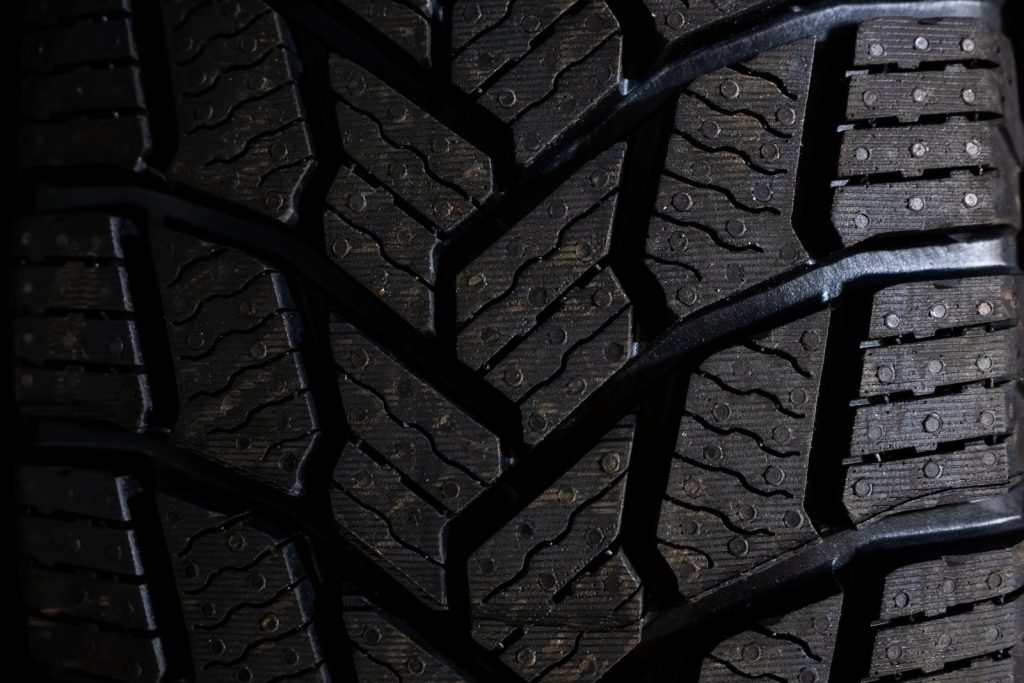
How do I know when I need new tires in Wisconsin?
You need new tires before the tread reaches the legal minimum of 2/32 of an inch, because snow and slush call for far more grip than that. Cracks in the sidewall, bulges, cords showing, or wear that keeps getting worse on one edge are all signs a tire is finished, whatever the tread looks like.
Age matters too. Rubber hardens over the years, even on a tire that spends most of its life in a cool garage. When we check your tires, we measure tread in several spots, look over both sidewalls, and send the readings and photos straight to your phone so you can see what we see.
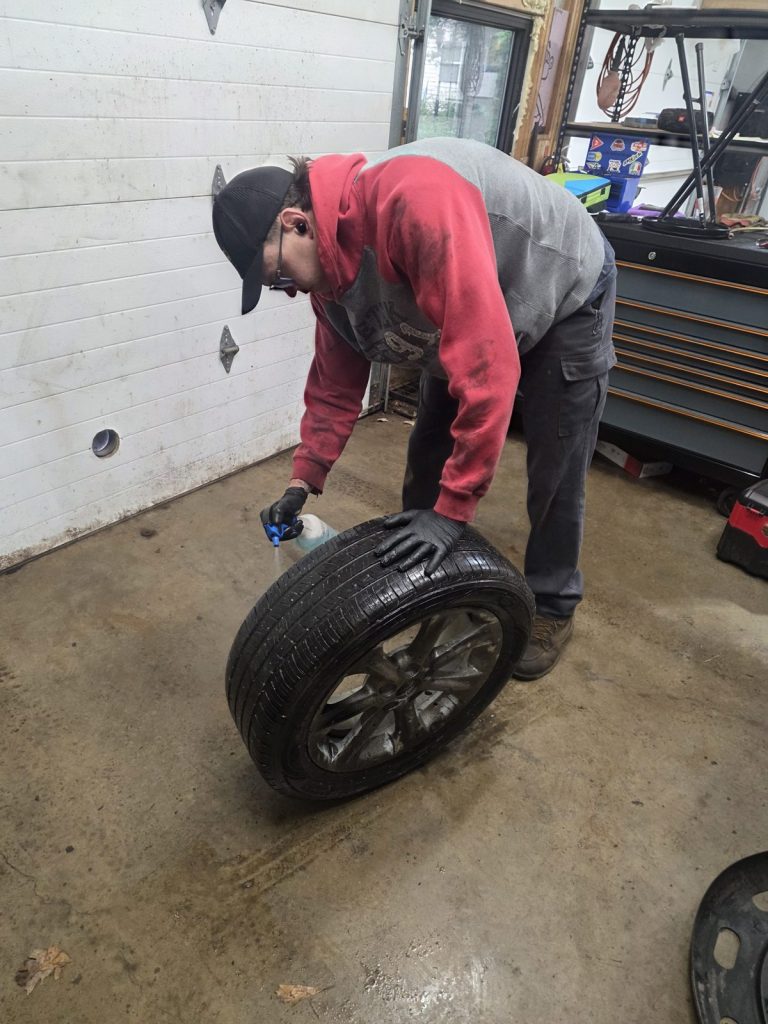
The penny test checks your tire tread in ten seconds
Put a penny into the tread groove with Lincoln’s head upside down and facing you. If you can see the top of his head, the tire is at or near 2/32 of an inch and should be replaced. Try it in several spots across each tire, since tread often wears unevenly from edge to edge.
Expert tip: Use a quarter for a winter check. Put Washington’s head into the groove upside down, and if you can see the top of his head, you have less than about 4/32 left. That is a good sign to start shopping before the snow flies.
Winter tires stop shorter on Star Prairie ice than all-season tires
Winter tires use a softer rubber that stays flexible below freezing, plus deeper tread with more biting edges, so they grip and stop much better on snow and ice. All-season tires work well for many drivers who stay on plowed roads, though early commutes and unplowed rural roads make winter tires worth it.
All-season rubber stiffens as the temperature drops, which is why a set that grips fine in October can feel slippery in January. All-wheel drive on a Subaru Forester or four-wheel drive on a Toyota Tacoma helps you get moving in snow. Stopping and turning on a slick county road still depend on the tires.
When can a flat tire be repaired?
A flat tire can usually be repaired when the puncture is small and sits in the main tread area, away from the shoulder. We take the tire off the wheel, inspect the inside, and seal the hole with a plug and patch together. A tire that was driven flat often has hidden inner damage.
Expert tip: If you find a nail in your tire, leave it in place and check the pressure. The nail often plugs the hole well enough to get you to the shop, and pulling it out can turn a slow leak into a flat.
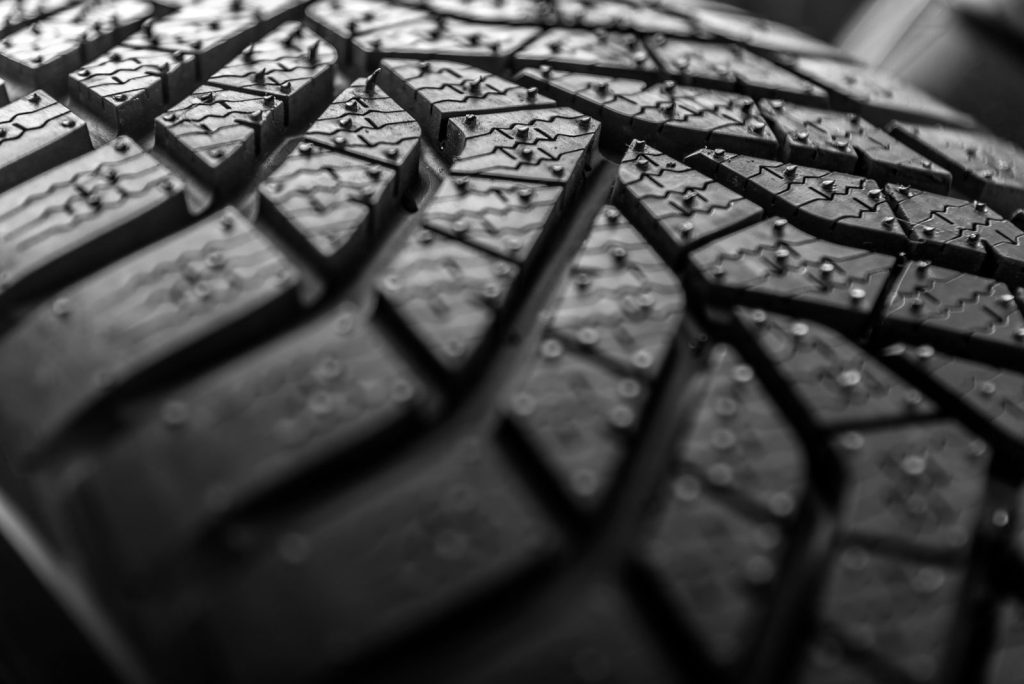
A sidewall puncture always means a new tire
The sidewall flexes with every turn of the wheel, so a patch there will never hold up at highway speed on WI-64.
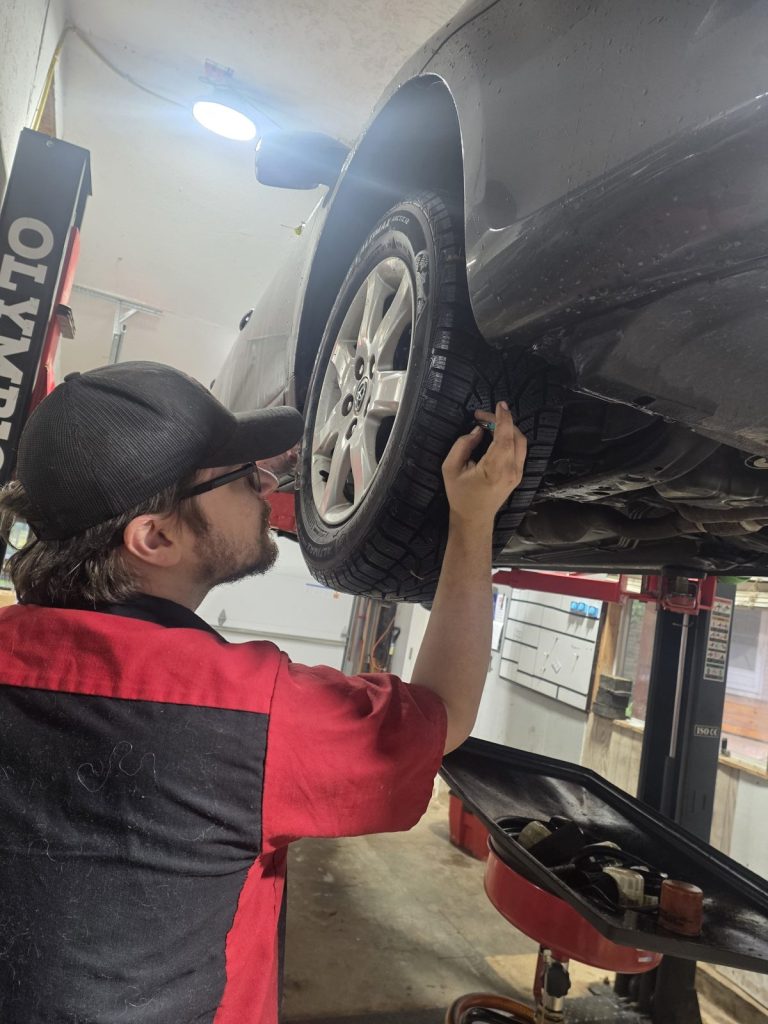
Cold mornings turn on the tire pressure light
Tire pressure drops about 1 PSI for every 10 degrees Fahrenheit the temperature falls. A tire set right on a 70-degree afternoon can be several pounds low on a subzero morning, which trips the warning light. Check all four with a gauge and fill them to the number on the driver’s door sticker.
If the light stays on after filling, or flashes for about a minute and then stays lit, a sensor has failed. We test each one and replace only what is bad.
Expert tip: Check your tire pressure first thing in the morning, before you drive, while the tires are cold. Driving warms the air inside and gives you a falsely high reading.
What should new tire installation include?
Good tire installation includes mounting and balancing each tire, new valve stems or a service kit for the pressure sensors, lug nuts tightened to the correct torque, and a reset of the tire pressure system. An alignment check is smart too, so a new set wears evenly from the first mile.
When we help you choose, we look at:
- The size and load rating your vehicle calls for
- How and where you drive, from highway commutes to gravel roads
- Your plans for a separate set of winter tires
If your old tires wore unevenly, a wheel alignment before the new set goes on can save it from the same fate.
How often should tires be rotated and balanced?
Rotate your tires as often as your owner’s manual says, which for many vehicles works out to every few thousand miles. Balance them when new tires go on and any time you feel a vibration in the steering wheel or seat at highway speed. Pairing a rotation with your oil change keeps you on schedule.
Front tires on a Honda Civic or Toyota Corolla wear faster because they steer and pull the car. A shake only when braking usually means rotors, covered on our brake repair page, and cupped tread points to worn struts we check during suspension and steering repair.

Tire service cost and time depend on size, type and sensors
Tire rotations, balancing and most flat repairs are quick jobs, and new tire installation takes a bit longer. Cost depends on tire size, the type of tire you choose, whether sensors or valve stems need replacing, and any alignment you add. Your estimate shows tread readings and photos before we touch a lug nut.
Many folks wait at TinJToo Auto Repair for a rotation or flat repair. If you would rather keep your day moving, drop the vehicle off and we will text you when it is ready. Book a winter tire swap early in the fall to beat the first snow.
Where can I get tires and tire repair near me in Star Prairie?
Before the first cold snap, bring your car, SUV, minivan or pickup to TinJToo Auto Repair at 170 County Hwy M, Star Prairie, WI 54026. We are open Monday to Friday, 8 AM to 5 PM, and we install, rotate, balance and repair tires on Asian and domestic models. Call (715) 417-2844 or schedule online to book your visit.
We are close by for drivers in New Richmond and Deer Park, and our other services cover the rest of your vehicle while it is here. Learn more about our auto repair shop in Star Prairie, then book your tire service before the next frosty morning turns that pressure light on again.
Star Prairie, WI 54026:
170 County Hwy M
Call TinJToo Auto Repair
(715) 417-2844
Mon - Fri: 8:00am - 5:00pm
After-hours drop-off available
TINJTOO AUTO REPAIR
- 170 County Hwy M
- Star Prairie, WI 54026
- Phone:(715) 417-2844
- Find us on Google
- Privacy Policy
OUR SERVICES
HOURS
- Monday:8:00am - 5:00pm
- Tuesday:8:00am - 5:00pm
- Wednesday:8:00am - 5:00pm
- Thursday:8:00am - 5:00pm
- Friday:8:00am - 5:00pm
- Saturday:Closed
- Sunday:Closed