
- October 13, 2026
- By Jarred Berhow
- In Auto Repair Tips
- 3
- 0
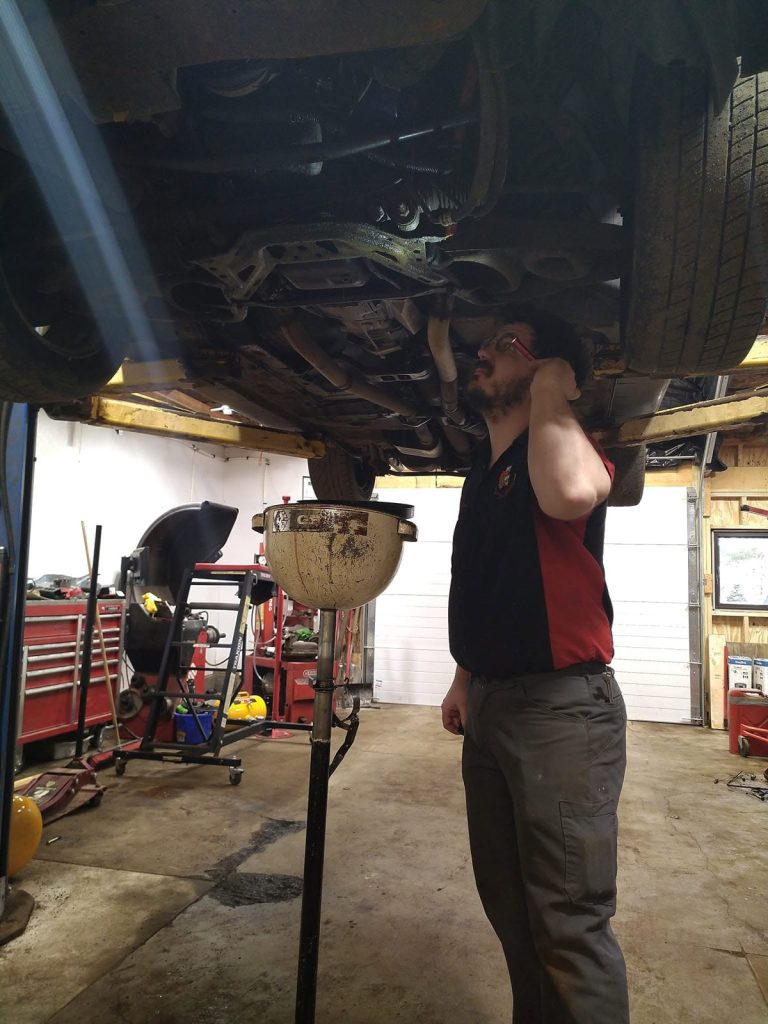
If you drive a Subaru Outback or Forester, or a Nissan Rogue or Altima, odds are good your vehicle has a CVT, short for continuously variable transmission. Honda and Toyota use them on popular models too, including the CR-V and Corolla. CVTs help fuel economy and give a smooth, seamless feel, and they come with
If you drive a Subaru Outback or Forester, or a Nissan Rogue or Altima, odds are good your vehicle has a CVT, short for continuously variable transmission. Honda and Toyota use them on popular models too, including the CR-V and Corolla. CVTs help fuel economy and give a smooth, seamless feel, and they come with plenty of myths.
Drivers around Star Prairie, Amery and New Richmond depend on these vehicles through long commutes, gravel roads and snowy winters. Here are the CVT myths we hear most, with straight answers from TinJToo Auto Repair on how to make yours last.
A CVT, or continuously variable transmission, works differently from a traditional automatic. Most use a steel belt or chain running between two pulleys that change width as you drive. That gives the transmission a smooth range of ratios in place of fixed gears, so the engine can stay at its most efficient speed.
That design is why a CVT feels smooth, with no distinct shifts, and why the engine may hold a steady hum as you speed up. Many newer CVTs add simulated “steps” so acceleration feels more familiar. The belt and pulleys rely on the fluid for grip and cooling, which makes fluid care even more important than in a geared automatic.
Some owner’s manuals list no regular change interval for CVT fluid under normal driving, and that leads many drivers to assume it never needs service. Real-world Wisconsin driving usually counts as severe service. Short trips, cold starts, hills and stop-and-go traffic wear the fluid down, and worn fluid lets the belt and pulleys slip and run hotter.
CVT fluid has a tough job. It has to let the belt grip the pulleys firmly while it also cools and lubricates everything inside. As it ages, it loses that friction quality. For hard use, a fluid change somewhere around 30,000 to 60,000 miles is a common recommendation, and your owner’s manual and driving habits set the exact timing. Your vehicle maintenance schedule is the place to keep track of it.
The fluid type matters just as much. Subaru and Nissan each call for their own specific CVT fluid, and a universal transmission fluid can damage the belt and pulleys. Many models also need the level set at a precise fluid temperature, which a technician reads with a scan tool.
Expert tip: Ask for your CVT fluid change to be done with the exact fluid your carmaker specifies, and keep the receipt in the glovebox. A clean service history tells the next technician what has been done, and it helps when you sell the vehicle.
Heat builds inside a CVT any time the transmission works hard, in any season. Climbing long hills, sitting in stop-and-go traffic, carrying a heavy load and spinning the tires in deep snow all raise fluid temperature. Heat breaks the fluid down faster, and some models will cut power to protect themselves when the CVT gets too hot.
Winter brings its own version of this. Rocking back and forth to get out of a snowbank, or spinning the wheels on an icy driveway for minutes at a time, puts a lot of heat into a CVT very quickly. A fully loaded drive to the cabin on a humid July day does the same.
Expert tip: If you get stuck in snow, give the CVT a break. Try a few gentle forward and reverse attempts, then stop, let it cool for a few minutes, and clear snow or add traction under the tires. If a transmission temperature warning appears, pull over safely and let the vehicle idle in park until it goes out.
A smooth, faint hum is normal for many CVTs. A shudder when you pull away, a whine that grows louder over time, or a delay before the vehicle moves are warning signs. Catching these early often means a smaller repair, so they are worth having checked before they get worse. Watch for these:
Many of these symptoms also turn on the check engine light, and the stored codes give a technician a place to start. Our check engine light diagnostics page explains how a code becomes a real answer.
Many CVT-equipped SUVs, including the Subaru Outback and Forester and the Nissan Rogue, are rated to pull a small trailer. The key is staying within the limit in your owner’s manual and treating that driving as severe service. A small fishing boat or a utility trailer within the rating is fine, and the extra load means extra heat.
If you pull a trailer regularly, plan on more frequent CVT fluid service. Accelerate gently, give yourself extra room to slow down, and take long grades at a steady pace. If a warning light comes on, stop somewhere safe and let the transmission cool.
Many CVT complaints come from causes much smaller than a failed transmission. Low or worn fluid, a faulty sensor, wiring trouble, a sticking solenoid or a needed software update can all cause shudder or hesitation. Diagnosis comes first, with a road test, a scan for codes and live data, and a fluid check.
Some CVTs do wear out, and replacement is the right call when the belt, pulleys or internal parts are damaged. When that happens at TinJToo Auto Repair, you get a digital estimate with photos and videos, a clear explanation of your options, and a 4-year / 48,000-mile warranty on the repair. A loaner vehicle can keep you on the road while the work is done, and financing through EasyPay can spread out a big repair. Learn more on our transmission repair page.
If your Subaru or Nissan CVT is due for fluid service, or something feels off, bring it in early. We work on Asian and domestic cars, SUVs, minivans and light trucks from 1996 and newer, and we explain what we find in plain words so you can decide what to do now and what can wait.
We are at 170 County Hwy M, Star Prairie, WI 54026, open Monday through Friday from 8:00 AM to 5:00 PM. Call (715) 417-2844 or schedule a CVT check online.