- (715) 417-2844
- 170 County Hwy M, Star Prairie, WI 54026
- Mon - Fri: 8:00am - 5:00pm

Car AC & Heating Repair in Star Prairie, WI
- HOME
- /
- Our Services: Maintenance, Diagnostics and Repair
- /
- Car AC & Heating Repair in Star Prairie, WI
Car AC and heating repair matters in Star Prairie, where summer brings sticky, humid afternoons and winter brings mornings well below zero. Your vehicle’s climate system keeps you comfortable, and in winter its defroster keeps your windshield clear enough to drive safely.
At TinJToo Auto Repair, we work on the air conditioning, heater and defrost systems in the Asian and domestic vehicles our neighbors drive, from sedans and minivans to pickups. Drivers from Somerset to Amery bring us everything from a Honda Accord blowing warm air in July to a Ford Explorer with a heater that quits in January. We find the cause first, then fix it right.

Why is my car AC blowing warm air?
A car AC blows warm air most often because refrigerant has leaked out, the compressor is not engaging, or the condenser is not getting rid of heat. Electrical faults and a blend door stuck on the heat side can do it too. Testing pressures, temperatures and the electrical side shows which one it is.
On a muggy July afternoon, we most often trace it to one of these:
- Low refrigerant from a leak in a hose, seal, condenser or evaporator
- A compressor clutch that does not engage
- A failed cooling fan or a condenser blocked by bugs and debris
- An electrical fault in a pressure switch, relay or fuse
AC that cools on the highway but turns warm at a stoplight usually points to poor airflow across the condenser. At speed, outside air rushes through it. At idle, the cooling fan has to do that job, so a weak fan or a slightly low charge shows up there first. Those same fans help control engine temperature, so if your gauge climbs at idle too, read about overheating on our engine repair page.
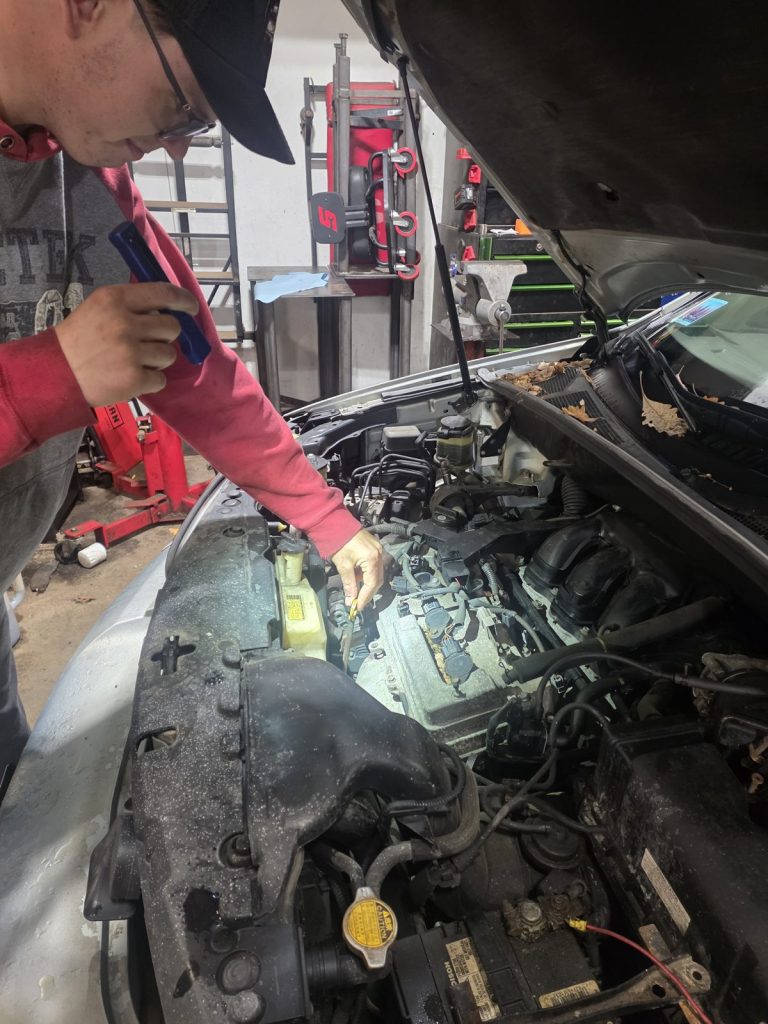
We leak test before every AC recharge at our Star Prairie shop
We leak test before an AC recharge because refrigerant does not get used up like fuel. If the system is low, it leaked somewhere, and adding more without a fix means it escapes again, sometimes within days. We are EPA Section 609 certified for vehicle air conditioning work, which covers safe refrigerant handling and recovery.
Common leak points include the condenser at the front of the vehicle, where gravel and road debris can puncture it, along with hose fittings, O-rings and the compressor seal. Road salt also corrodes aluminum AC lines and fittings over time. Once the leak is repaired, the system is evacuated with a vacuum pump and recharged to the exact amount your vehicle calls for.
Expert tip: Run your AC for about ten minutes once a month whenever it is warm enough outside, and use defrost in cold weather, which runs the compressor on many vehicles. The refrigerant carries oil that keeps the compressor seals moist, and seals that sit dry for months are more likely to leak.
A musty smell from the AC vents usually means mold on the evaporator
A musty smell from the AC usually comes from mold growing on a damp evaporator behind the dash. The evaporator stays wet while the AC runs, and in our humid summers it can grow mold and bacteria. Cleaning the system and replacing the cabin air filter clears up most odors without major parts.
Weak airflow is the other common summer complaint. A clogged cabin filter or a failing blower motor is usually the cause, and both are simple to test. You can ask us to look at the cabin filter during a regular oil change.
Expert tip: When the AC feels weak, check the cabin air filter first. A clogged filter cuts airflow and can make the whole system seem like it is failing. Look up the interval in your owner’s manual, and replace it sooner if you drive dusty gravel roads often.

When winter comes, the heater and defroster take over
When the first subzero morning hits Star Prairie, your heater and defroster are what keep the windshield clear enough to see the deer standing on the shoulder.
Why is my car heater blowing cold air in winter?
A heater that blows cold in winter usually means hot coolant is not reaching the heater core. Common causes are low coolant from a leak, a thermostat stuck open, air trapped in the cooling system, a clogged heater core or a blend door that will not move to the heat side.
Your heater runs on engine heat. Coolant warmed by the engine flows through a small radiator behind the dash called the heater core, and the blower pushes air across it. A stuck-open thermostat often turns on the check engine light too, since the computer notices the engine is running too cool.
Clicking behind the dash, or heat on one side only, usually means a blend door actuator with a broken gear. Foggy windows that will not clear, a greasy film on the glass or a sweet smell in the cabin can mean the heater core is leaking coolant. That one needs attention soon, because a weak defroster on a dark county road is a real safety problem.
Expert tip: If your heater suddenly goes cold and the temperature gauge rises at the same time, pull over safely and shut the engine off. That combination usually means coolant is very low, and driving on can damage the engine. Never open a hot radiator cap.
Heater core and AC repair time depends on how deep in the dash the part sits
AC and heating repair cost and time depend on what failed, where a leak is hiding, how much of the dash has to come apart, and parts availability. A blend door near the glove box is quicker than a heater core deep in the dash, and either way you see photos and the price before we take anything apart.
Some climate repairs take the better part of a day or longer. For a heater core or another dash-out job, leave the vehicle after hours the night before, and ask about a loaner so you are not stuck at home while the dash is apart.
At TinJToo Auto Repair, we also tell you which repairs can wait. A clicking blend door is mostly an annoyance and can often be planned. A leaking heater core before winter should be fixed soon. Like every repair our mechanics handle, climate repairs are backed by our 4-year / 48,000-mile warranty.

Where can I get AC and heating repair near me in Star Prairie?
Get ahead of the next heat wave or cold snap. Call (715) 417-2844 or schedule online, and tell us what the system is doing and when you first noticed it. TinJToo Auto Repair is at 170 County Hwy M in Star Prairie, WI 54026, and the shop is open 8 to 5 on weekdays.
We help drivers in Star Prairie, Somerset, Amery and the rest of western Wisconsin from our auto repair shop in Star Prairie. If you have a question about a smell, a noise or a fogged-up windshield, contact us about AC and heating repair and we will help you figure out the next step.
Star Prairie, WI 54026:
170 County Hwy M
Call TinJToo Auto Repair
(715) 417-2844
Mon - Fri: 8:00am - 5:00pm
After-hours drop-off available
TINJTOO AUTO REPAIR
- 170 County Hwy M
- Star Prairie, WI 54026
- Phone:(715) 417-2844
- Find us on Google
- Privacy Policy
OUR SERVICES
HOURS
- Monday:8:00am - 5:00pm
- Tuesday:8:00am - 5:00pm
- Wednesday:8:00am - 5:00pm
- Thursday:8:00am - 5:00pm
- Friday:8:00am - 5:00pm
- Saturday:Closed
- Sunday:Closed